
In preparation to getting a bike back on the road, we need to get the bike. Over the years we’ve experimented with professional shippers, trailers, pickup trucks but this time as there was about a 700 km distance one-way we decided to try a cargo van.
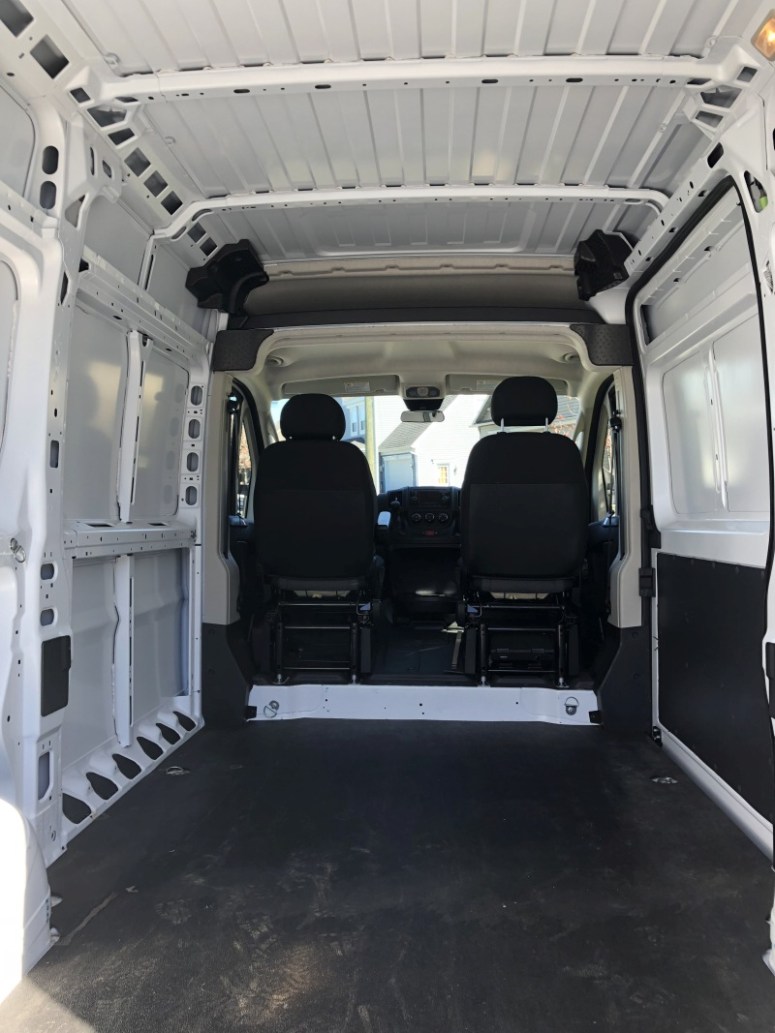
The price was reasonably cheap (around $ 140 CAD for a day’s rental including taxes and insurance) most auto insurances do not cover “commercial vehicle rental” so best to check. The advantages are a low loading height, plenty of “D” anchors to choose from and better fuel economy than lugging a trailer. Disadvantages include gasoline vapors in the cabin if the bike leaks.
In this case, after discussing with the seller, he indicated that the bike had been stored 20 years ago in a heated space. It had the gas tank, carbs drained, oil in the cylinders, battery removed so this shouldn’t be an issue. He was the second owner and it was a low mileage bike, “all original”. This sounded promising.
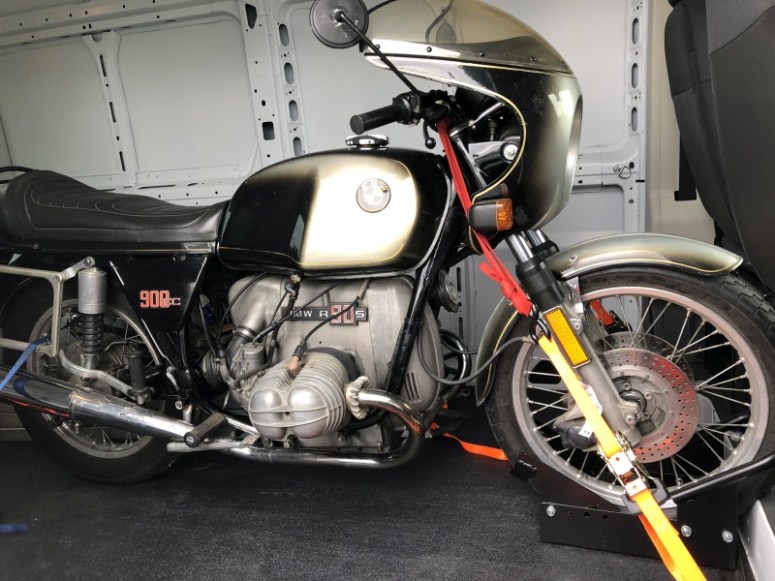
In terms of equipment for transportation, handy things to have include a bike ramp, some tie-downs and a wheel chock. The latter is really useful in keeping things stable. While one could be easily build out of wood, they are fairly cheap to buy so not a bad “investment”.
The other important thing to have on hand is a proper shop manual. While the internet is great for a number of things, but it is also full of misinformation. The wealth of information in the service manuals make for a very wise investment indeed. If we are sticking to the /5 and later airheads, the choices are generally between 3 manuals;
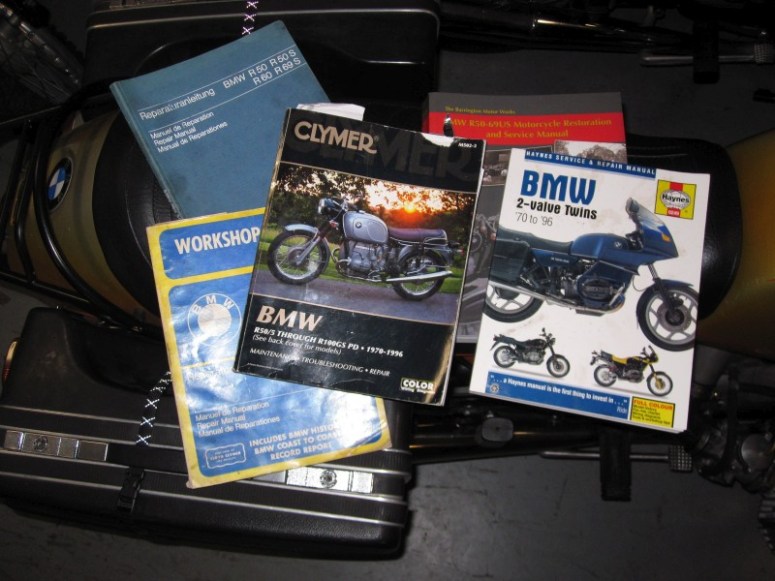
Haynes, Clymer, and Factory Manual
Which one is the best? They are all slightly different and have their strengths and weaknesses. In my opinion, the Clymer is the most complete and will give the most detailed instructions about how to accomplish tasks, the best for a “backyard mechanic” but can have some errors in torque values and other minor details. The factory manual tends to assume that one is a factory-trained mechanic and will skip “basic knowledge” steps in descriptions.
Ideally one has several manuals and can go back and forth from one to another when doing more complex work. If I could only have one, I would go with the Clymer. It tends to be my “go-to”
Prior to driving down to get the bike, I also ordered a few items that would be needed “for sure”, just to save some time when the bike got here. A new battery was a must, as were new tubes and tires. There’s no way tires can still be safe 20 years later.
OK, lets look at the bike !
 R&D Vintage Airheads